With Coach Kelvin, offering Online Running Coaching for We Run and the We Run Virtual Running Club, and 1:1 Running Coach for Leeds and surrounding areas.
Why Hydration and Nutrition Matter for Runners
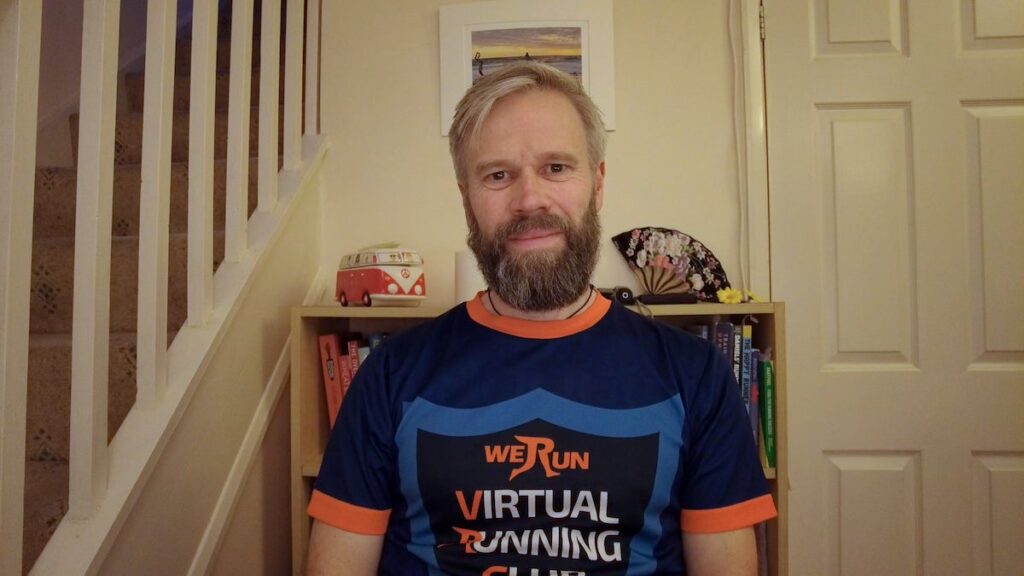
Hi folks, it’s Kelvin here. We Run Coach for Leeds and surrounding areas, as well as online coaching.
In this little video, I’m going to talk about hydration and nutrition for long runs, workouts, and races.
I talk about this a lot because it’s really important. It’s not just about getting through your run – it’s about helping your body recover and allowing you to push a little bit harder during training or racing.
That harder effort creates a stronger training stimulus. When you recover properly from that, you get greater training adaptations. So it’s not just about race day – it’s every workout or long run with intensity. These small actions really do add up.
Pre-Workout and Pre-Race Strategy
1–2 Days Before:
In the couple of days leading up to a key session or race, make sure you’re well hydrated. Don’t skimp on fluid or sodium intake.
The Day Before:
I’ll usually have something fairly calorific mid-afternoon – especially before a race or long run. My go-to is burger and chips. In the evening, I keep it lighter but still fairly carb-focused so it doesn’t disrupt my sleep or leave me feeling sluggish the next day.
I also drink about 700ml of fluid with 1500mg of sodium later in the evening. That helps me head into the next day ahead on hydration.
Morning of the Run or Race
On the morning of a workout or race, I’ll repeat that hydration strategy – 700–800ml fluid with 1500mg sodium.
Then, I have breakfast with about 75g of carbohydrates, around two hours before the session.
About an hour before, I’ll take in 40g of carbohydrates, usually in the form of a Maurten cereal bar.
15 minutes before, I’ll take a gel with 100mg of caffeine – especially for races.
During the Run or Race
If the run or race is between 1.5 and 3 hours, I aim for:
- 500ml of fluid per hour
- 500mg of sodium per hour
- 100g of carbohydrate per hour
This can be adjusted based on temperature, duration, and individual tolerance, but that’s a good benchmark for most runners in those time ranges.
Post-Run Recovery
After the workout or race, my go-to is 500ml of chocolate milk, which gives me around 40g of carbs and 15g of protein.
I try to eat a small, snack-like meal within an hour of finishing, and then a full meal within two hours.
Why It All Matters
It might sound like a lot of effort for just one workout or race, but all of this allows you to:
- Push harder
- Create a stronger training stimulus
- Recover more effectively
- Build bigger long-term training gains
So if you’re heading into a longer run, a hard workout, or a race, don’t cut corners on nutrition and hydration. Think of recovery as part of your training strategy.
It all adds up to faster times and healthier, more sustainable training.
Let’s Keep the Conversation Going
If you’ve got any questions or comments, just pop them down below.
And for now, happy running.